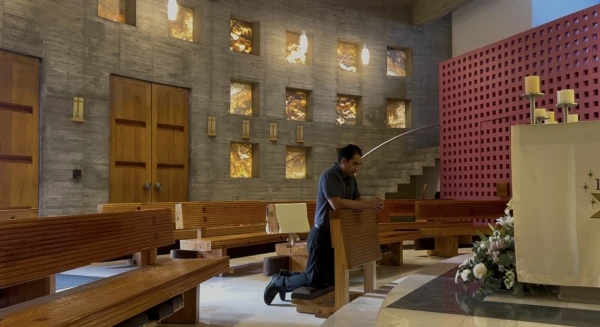
To better serve the expanding Hispanic Catholic population in the United States and Canada, future priests from both nations are undertaking their formation at the Hispanic Seminary of Our Lady of Guadalupe in Mexico. This multicultural center prepares clergy to understand and minister within Hispanic cultures.
Founded on August 31, 1999, by Cardinal Norberto Rivera, then-primate archbishop of Mexico, the seminary was established in direct response to the Church’s identified need for priests equipped to engage with the cultural richness of Hispanics in North America.
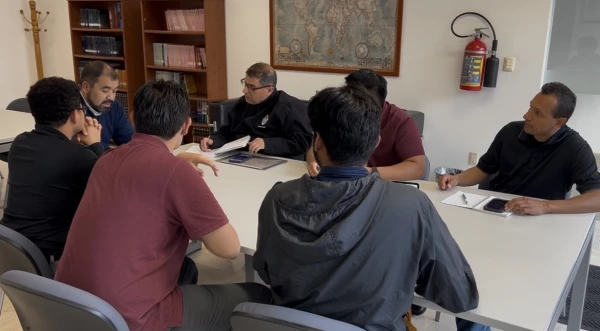
Cardinal Rivera’s initiative was inspired by Saint John Paul II’s 1999 apostolic exhortation, Ecclesia in America, which called for a new evangelization across the Americas. The seminary welcomed its first five seminarians from the archdioceses of Los Angeles and Milwaukee in August 2000. Since its inception, over 200 graduates from at least 55 U.S. dioceses have been formed at the center.
Forming a Church Without Borders
In an interview, Father Juan Antonio Vértiz Gutiérrez, the seminary’s rector, emphasized that the formation extends far beyond language acquisition. Seminarians immerse themselves in the life, ecclesial traditions, and culture of the Mexican Church, particularly through hands-on apostolic work.
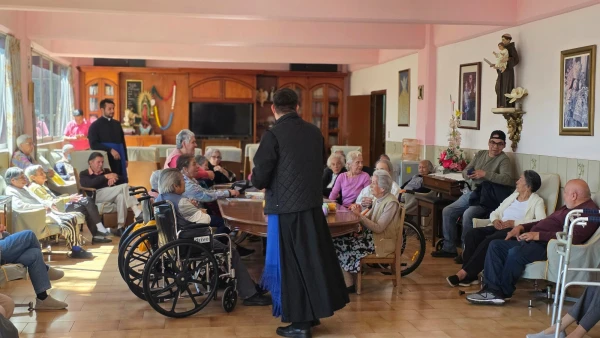
This immersive experience, Father Vértiz explained, equips future priests to “better serve our fellow countrymen and our brothers and sisters of Hispanic origin” upon their return to their home dioceses. It fosters an understanding of two distinct cultural realities united in one faith. He highlighted that in an era often divided by immigration debates, the seminary embodies a Catholicism that “doesn’t have any borders,” affirming that every person “already belongs to the family of the children of God.”
Life and Formation at the Seminary
The seminary’s daily rhythm mirrors that of a typical house of formation, with a dedicated focus on cultural encounter. Mornings are spent in philosophical and theological studies at Lumen Gentium Catholic University, while afternoons are devoted to intensive language learning and spiritual formation. During Holy Week, seminarians often serve in communities outside Mexico City.
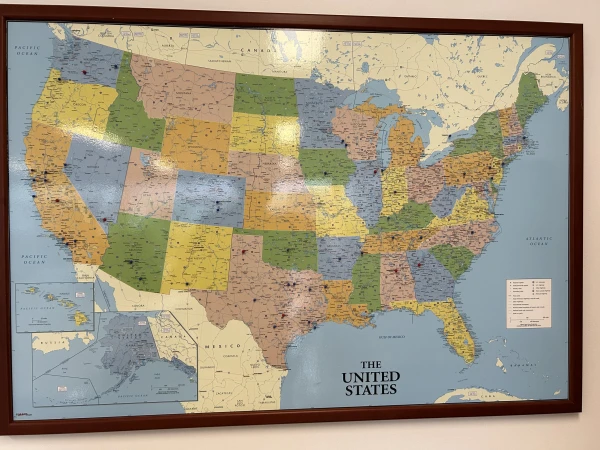
Admissions are handled through U.S. diocesan vocations offices. “We do not accept young men who do not belong to a diocese,” the rector clarified. The seminary currently hosts 16 seminarians from dioceses in California, Nevada, Washington, Texas, Illinois, Alabama, and Georgia.
Personal Journeys of Faith and Service
Ramsés Yates, from the Diocese of Yakima, Washington, arrived a year and a half ago to complete his theology studies and learn Spanish. He shared that witnessing vibrant Mexican Catholic communities has filled him with “much hope and much joy.” He looks forward to returning to Yakima, eager to communicate with and serve many more parishioners in his diocese.
Ramón Pérez, who migrated from Guanajuato, Mexico, to Fresno, California, as a teenager, felt a call to the priesthood after years of work. His diocese sent him to the seminary in Mexico to deepen his cultural roots and prepare him to support new immigrants. The experience, he says, has helped him reconnect with his origins, an integral part of his vocational journey.