
On July 28, Peru’s newly elected President Keiko Fujimori took an oath recognizing “the importance of the Catholic Church in the cultural and moral formation of Peru” and introduced a policy to improve the quality of life for Peruvians “from womb to tomb.”
Fujimori, who won a tight election that went to a runoff, assumed office during a formal session of Congress, receiving the presidential sash for the 2026–2031 term. She is the first woman elected by popular vote to lead the country.
The ceremony was attended by dignitaries from several nations, including King Felipe VI of Spain and Presidents Javier Milei of Argentina, Rodrigo Paz of Bolivia, José Antonio Kast of Chile, Daniel Noboa of Ecuador, Santiago Peña of Paraguay, Yamandú Orsi of Uruguay, José Raúl Mulino of Panama, and Nasry Asfura of Honduras.
“I, Keiko Sofía Fujimori Higuchi, swear by God, the homeland, and the holy Gospels to faithfully discharge the office of president of the republic that the nation has entrusted to me for the 2026–2031 term,” she declared during her oath of office.
She then vowed to defend “this land, national sovereignty, liberty, democracy, and the independence of the branches of government,” as well as to uphold and enforce the constitution and laws of Peru.
“I swear that I will safeguard the physical and moral well-being of all Peruvians, especially those who have been historically marginalized,” she continued.
Concluding her oath, Fujimori specifically referenced the Church: “I swear that, while respecting freedom of worship, I will recognize the importance of the Catholic Church in the cultural and moral formation of Peru, and I will work tirelessly for a safe, prosperous, and united country.”
Peru’s constitution states in Article 116 that the president must take an oath of office, though it does not prescribe a specific formula, although some wording is traditional.
In her first address to the nation, Fujimori said she was taking office with “profound humility” and “with a heart full of faith in the destiny of our homeland.”
“I thank God and place in his hands the work we begin today in the service of Peru,” she added.
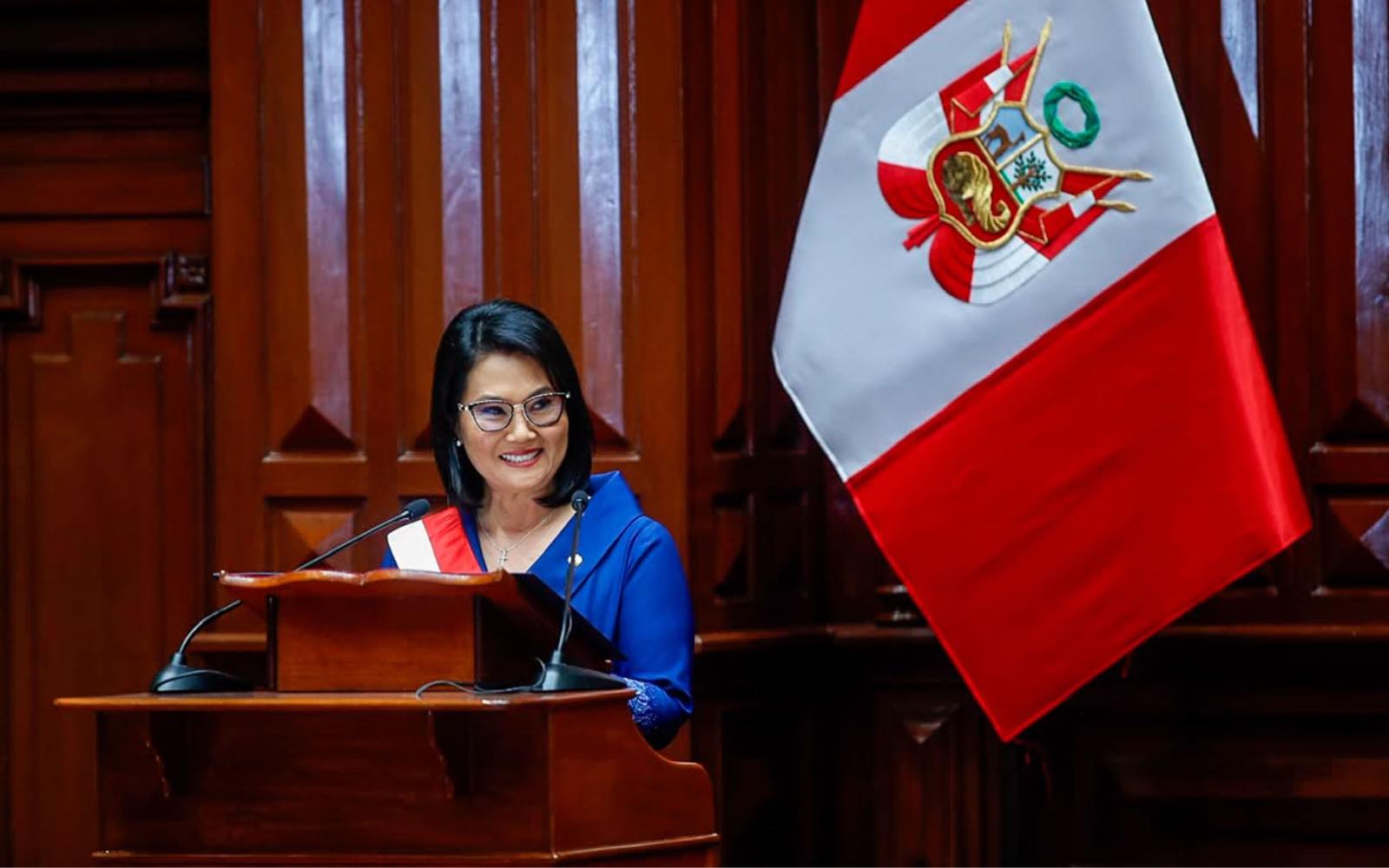
The new president asked God for “wisdom in making decisions, strength to persevere,” and help “never to forget that power only finds meaning when exercised to serve.”
Fujimori emphasized that she had sworn before God, “before history, and before all of you,” “the most sacred oath a citizen can take”: to defend the constitution, protect freedoms, and dedicate every day to the country’s well-being.
Improving Life ‘From Womb to Tomb’
In outlining her administration’s priorities, Fujimori stated one of her goals would be “to improve the quality of life for all Peruvians, from womb to tomb.”
To achieve this, she promised to adopt “a policy of comprehensive protection for early childhood, childhood, adolescence, and the family.”
“We will reorganize the social programs and public services that are currently fragmented in order to build a genuinely comprehensive protection system with universal coverage and continuous care at every stage of life,” she said.
“Protecting our children and strengthening their families means protecting Peru’s future,” she noted.
Poverty, Security, and Freedom of Expression
Fujimori described the state of the country as “complex and painful,” marked by corruption, insecurity, healthcare deficiencies, and deep social divides.
She highlighted that three out of every 10 Peruvians lack daily access to necessary food and that 35% of children aged 6 to 35 months suffer from anemia, a situation she called “truly immoral.”
On security, she announced plans to strengthen the police force, temporarily deploy the armed forces during states of emergency, and reform the prison system to ensure jails “return to being centers of confinement rather than operational hubs for organized crime.”
Her economic plans include raising the minimum living wage to 1,300 soles (approximately $382).
Fujimori also reaffirmed her commitment to “absolute respect for the independence of the branches of government and for individual liberties, particularly freedom of expression and freedom of the press.”
In closing, she called on opposition political forces to build dialogue bridges and urged them to think “of future generations, not the next elections.”
“There are not two different Perus; there is but one Peru — vibrant, multicultural, strong, and ancient — ready to stand tall,” she declared.
Cardinal Castillo Calls for Reconciliation with Justice
Hours before the inauguration, the Archbishop of Lima and Primate of Peru, Cardinal Carlos Castillo Mattasoglio, celebrated the traditional Mass and Te Deum at the Lima Cathedral marking the 205th anniversary of the nation’s independence.
During his homily, as reported by the ANDINA news agency, the cardinal urged the nation to overcome divisions through justice, solidarity, and the pursuit of the common good.
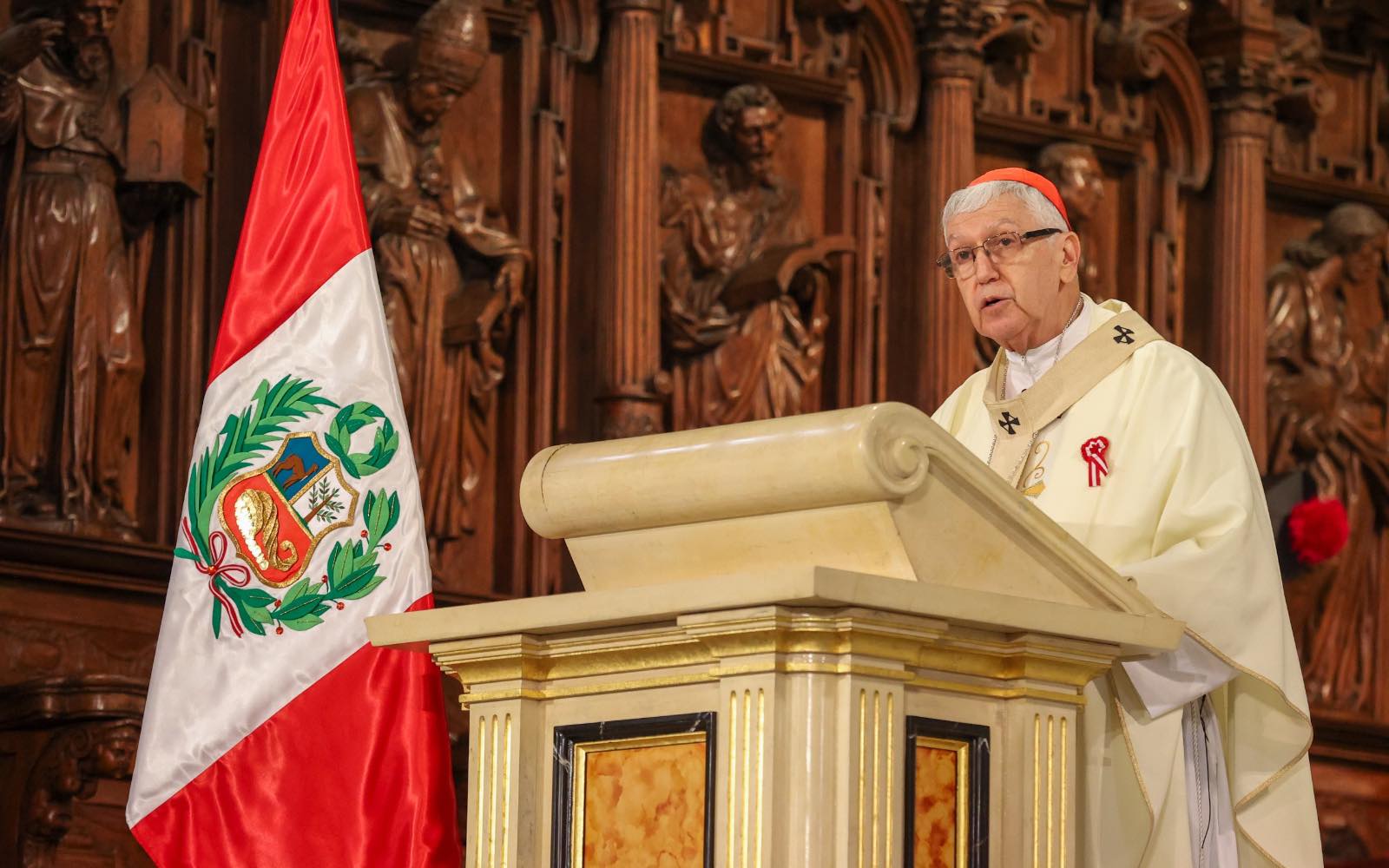
“Our God wants us to be in solidarity and to be just, not with a reconciliation that covers up the wrongs we have committed but rather a reconciliation that, clearly recognizing the injustices we have perpetrated, knows how to enact justice and make restitution to all those who have been harmed,” he said.
Castillo warned that Peru faces a “catastrophic” situation, not primarily due to economic indicators, but because “the human condition and human dignity are in grave danger.”
He called for initiatives aimed at reconciliation, peacemaking, and dialogue, as well as a process of conversion to rebuild the country on foundations of justice, solidarity, and the common good.